Last updated · General information, not legal advice
Understanding headaches after a car accident
Headaches after a car accident are common and usually connect to one of two underlying causes: a neck injury (cervicogenic headaches, often linked to whiplash) or a head injury (post-traumatic or post-concussion headaches). These two causes are classified quite differently under the CTP scheme — a neck-related headache is generally treated as part of a soft tissue, threshold injury, while a head-injury-related headache generally is not, since concussion and TBI fall outside the threshold definition. Identifying which is causing your headaches matters for how your claim is assessed.
Common symptoms
Symptoms can take hours or days to appear after a crash. Getting them assessed and documented early matters for your recovery — and for your claim.
- Headaches at the base of the skull, often linked to neck pain and stiffness
- Headaches with associated dizziness, light sensitivity, or difficulty concentrating, which can suggest a head injury
- Headaches triggered or worsened by neck movement
- Frequency or intensity of headaches increasing over time
- Associated symptoms like nausea or visual disturbance
Free claim check
Not sure where this leaves your claim?
How we help
A free claim check can help you understand whether your headaches are being treated as connected to a neck injury or a head injury under your claim, and why that distinction matters. Persistent post-accident headaches are worth pursuing properly, and we'll connect you with an independent lawyer where classification or ongoing treatment is being disputed.
Getting the right treatment
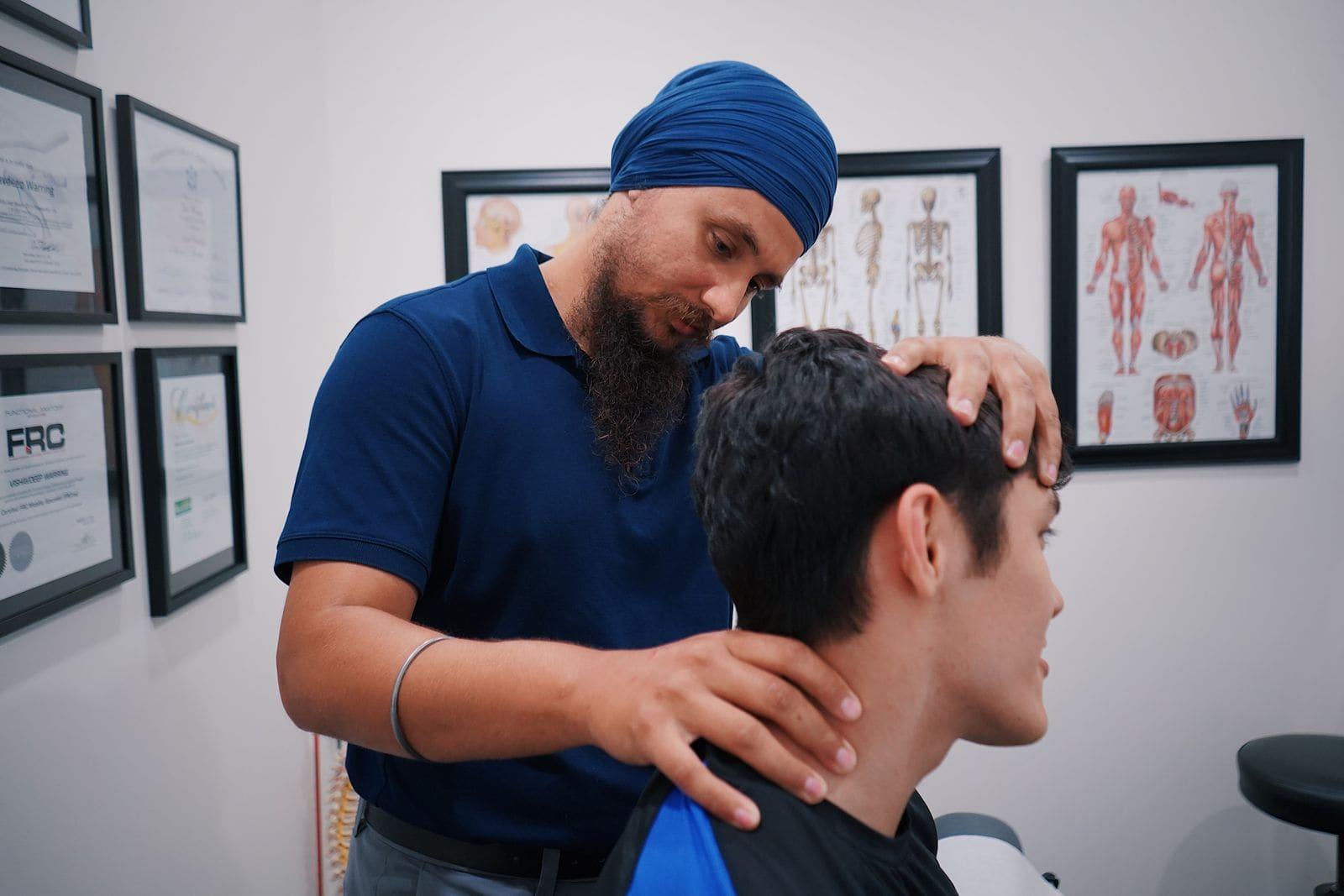
Identifying the underlying cause of your headaches — neck-related or head injury-related — starts with your doctor, who can also complete your Certificate of Fitness. Where headaches are linked to a neck injury, physiotherapy is often part of the treatment plan. See doctors and allied health for CTP claims for help finding the right providers.
Doctors & allied health for CTP claims
Doctors & allied health
Need a doctor who understands CTP claims?
Your claim runs on medical evidence, so the doctor you see matters. If treatment is what you need, we can refer you to a doctor or allied health provider experienced with CTP claims.
- A doctor experienced with CTP claims — for diagnosis, a treatment plan and your Certificate of Fitness, which records your injuries and your capacity for work.
- Allied health such as physiotherapy, psychology and exercise physiology, for the treatment your injuries need.
- Free, with no obligation. We'll tell you if a provider we refer you to is connected with us, and you can always choose your own.
The CTP insurer generally pays for treatment that is reasonable and necessary for your accident injuries. It decides what's approved, and its decisions can be reviewed.
What matters for your claim
- 1Ask your doctor to identify the likely source — neck-related versus head injury-related headaches
- 2Keep a headache diary noting frequency, triggers and severity
- 3Consider specialist referral (neurology) if headaches are frequent, severe, or not improving
- 4Document any associated symptoms — dizziness, light sensitivity, concentration difficulty
- 5Link ongoing headache treatment clearly back to the underlying diagnosed injury in your medical records
Getting the right evidence
If headaches persist or worsen after an accident, see your doctor to identify the underlying cause — this matters for both effective treatment and for how the headaches are classified as part of your claim. Seek urgent care for a sudden, severe headache or any signs of worsening head injury.
This is general information, not medical or legal advice. If symptoms are severe or worsening, seek medical care straight away — call 000 in an emergency.